Students from Politeknika Txorierri develop IoT projects to improve energy efficiency
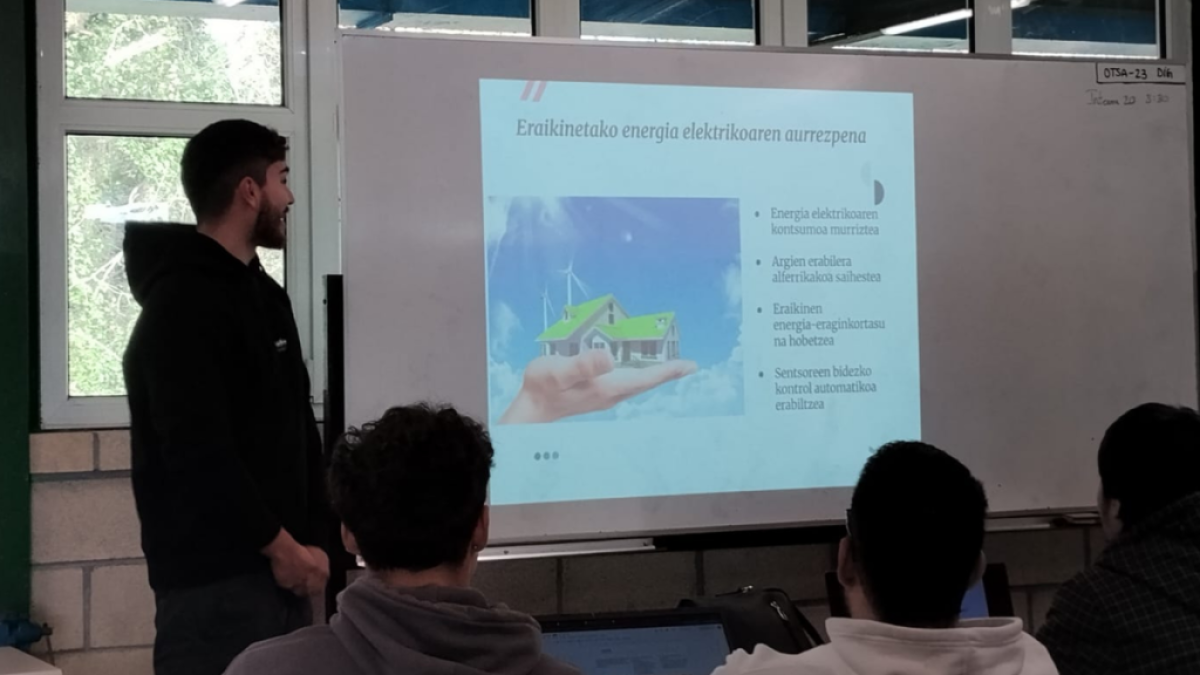
Students from the Industrial Automation and Robotics vocational programme at Politeknika Txorierri have recently presented a series of Internet of Things (IoT) projects focused on improving energy efficiency in industrial environments. Over the past ten weeks, the students worked in small teams to design and build technological solutions capable of monitoring and optimising energy consumption, applying in practice many of the concepts they have been studying throughout the course.
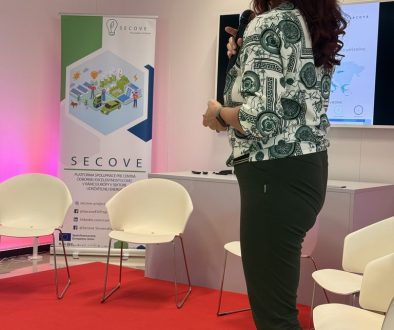
The activity is connected to the European SECOVE project, which promotes innovation in vocational education and encourages the use of emerging technologies such as IoT in industrial and energy-related contexts. Within this framework, students were invited to approach the challenge as if it were a real engineering project, starting from an initial idea and developing it step by step until reaching a functional solution ready to be presented.
IoT projects assessed by industry professionals

The projects were evaluated by a mixed panel that included teachers from the Industrial Automation and Robotics programme as well as representatives from industry. The external members of the jury were Jon Mitxelena from the GAIA Cluster and Jon Zubiria from Ondoan, who contributed their professional perspective when analysing the proposals and discussing them with the students.
Presenting their work in front of external professionals gave the students a taste of what similar situations might look like in their future careers. Beyond the technical performance of the systems, the evaluation also considered how clearly each team explained its proposal and how well the students were able to justify the design decisions behind their solutions. For many of them, defending the project and answering questions from the jury turned out to be one of the most valuable parts of the experience.
Alongside the technical implementation, the teams also prepared a detailed report describing the design process, the architecture of the system and the expected impact of the solution on energy efficiency. This combination of practical development and technical documentation allowed the students to strengthen their competences in IoT technologies, industrial automation and energy monitoring, while at the same time working on transversal skills such as teamwork, problem solving and project communication.
Applied learning linked to the industrial world
Activities like this reflect the educational approach promoted at Politeknika Txorierri, where project-based learning and collaboration with industry play an important role in connecting vocational education with real professional contexts. By working on applied technological challenges, students gain experience that closely resembles the type of projects they may encounter later in the industrial sector.

The initiative is also linked to the SECOVE National Competition, which encourages vocational education students across Europe to develop technological solutions related to sustainable energy and digital transformation. The projects presented by the Politeknika Txorierri teams received very positive feedback and will be shared through the communication channels of the SECOVE project.
Some of the teams may also have the opportunity to represent the centre in the international phase of the competition, scheduled for May 2026 in Greece, at the Saek Galeo centre. The event will bring together vocational education students from several European countries, offering them the chance to present their work, exchange ideas and explore how emerging technologies can contribute to more sustainable industrial systems.