Translating Strategy into Action: How SECOVE Insights Shaped UNIWA’s NewPhotovoltaic Systems Programme
Bridging the gap between policy and practice
The transition toward a green, circular economy requires more than high-level policy declarations; it demands targeted, responsive educational interventions that prepare the workforce for the jobs of tomorrow. The new Vocational Education and Training (VET) programme, “Photovoltaic Systems: Applications and Design”, recently launched by the Centre of Continuing Education and Lifelong Learning (KEDIVIM) at the University of West Attica (UNIWA), is a prime example of this philosophy in action.
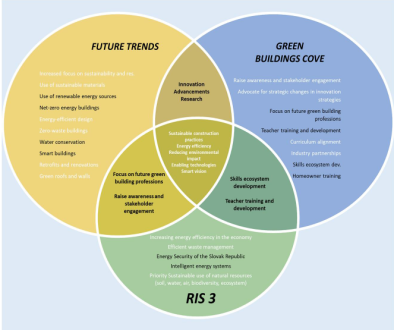
This innovative programme is not simply a standalone academic offering. Instead, it represents a direct operationalisation of the findings, identified gaps, and strategic recommendations outlined in the SECOVE project’s Deliverable “Recommendations foralignment of VET courses to Smart Specialisation Strategies (RIS3)”. By mapping the features ofUNIWA’s new programme againstthe SECOVE report for the Attica Region, it becomes clear that this VET offering was meticulously engineered to turn the project’sstrategic insights into a tangible educational reality.
Addressing the “fitness gap” in the Greek VET ecosystem
A foundational driver for the creation of UNIWA’s new programme stems from the “Fitness Analysis” within the D3.2 report. The SECOVE analysis revealed a critical disconnect within the Greek educational landscape: traditional secondary vocational education (EPAL) and existing post-secondary institutes currently lack the specialised curricula necessary to align with the country’s smart specialisation strategy for sustainable energy. The report highlighted a specific, structural deficit in training technicians for renewable energy installations and smart grid technologies.
To resolve this bottleneck, the SECOVE report explicitly called upon Higher Educational Institutions (HEis) to act as regional catalysts for change, specifically naming UNIWA as a key provider already focusing on energy conservation and Renewable Energy Sources (RES). UNIWA developed the Photovoltaics VET programme to directly fulfil this mandate. Recognising thatthe traditional VET system requires time to adapt, UNIWA stepped in to bridge the immediate “skills gap<<. The university designed a targeted, high-level continuing education programme that directly produces the “Renewable Energy Technicians” and upskilled engineers that the SECOVE “Future Trends” analysis identified as urgently needed by the labour market.
Aligning with RIS3 priorities and future trends
The SECOVE report dictates that new VET programmes must strictly align with Greece’s National Smart Specialisation Strategy 2021-2027, which heavily prioritises “Renewable sources for energy production” and “Energy efficiency”. Furthermore, the report’s “Future Trends and Alignment Analysis” stressed the urgent necessity for “specialised masters and other forms ofcontinuing training” for electrical and mechanical engineers, as well as dedicated technicians in renewable energy.
UNIWA designed the Photovoltaic Systems program as a direct response to this specific recommendation. By focusing on the end-to-end design, application, and implementation of PV systems, the program provides the exact “green skills” the SECOVE reportidentified as missing from the current workforce. It transforms conventional electrical and mechanical knowledge into highly specialised, market-ready competencies in solar energy, ensuring that the Attica region’s workforce is perfectly aligned with the national strategic priority of expanding RES installations and reducing the carbon footprint.
Implementing a flexible, short-term training model
The D3.2 report concludes that “modern training systems aim to offer specialised programs… designed to be brief in duration, ensuring that the knowledge imparted remains relevant in the rapidly evolving job landscape«. The report emphasises that “flexibility, both in terms of content and operational methods, is essential” for adult learners.
UNIWA actively adopted this pedagogical blueprint for its Photovoltaics programme. Rather than a multi-year academic degree, theuniversity structured the VET programme as an intensive SO-hour course delivered over just 6 weeks. To fulfil the SECOVEmandate for adaptability-especially for adults already active in the job market-UNIWA implemented a blended learning methodology. The course combines 41 hours of synchronous distance learning with evening class schedules (18:00-21:00). Thisstructural design proves that UNIWA utilised SECOVE recommendations to create a frictionless pathway for working professionals to reskill without interrupting their current employment.
Fulfilling the “Modernisation of laboratories” directive
A core recommendation under SECOVE’s “Best Co VE Practices” is the “Modernisation of Laboratories«. The report emphasises thatCentres of Vocational Excellence must provide practical training that mirrors “real-world working conditions and production parameters«.
UNIWA embedded this directive directly into the heart of its new curriculum. While the theoretical components are delivered online for maximum flexibility, the program strictly mandates 12 hours of physical, hands-on laboratory presence. This ensures that the theoretical design of PV systems is immediately grounded in practical, real-world application. By integrating its state-of-the-art university laboratories into a short-term VET course, UNIWA successfully bridges the gap between academic theory and thevocational, hands-on technical skills demanded by the Greek solar industry.
Business performance and labour market integration
The SECOVE report strongly urges the “Direct Integration of the Labour Market with Educational Institutions” to develop programs that address “real-time demands”. Over the last decade, Greece has witnessed exponential growth in solar energy investments, leading to a severe shortage of certified practitioners capable of properly designing and maintaining these systems.
UNIWA developed the Photovoltaics programme as a direct intervention for this specific market need. Embodying SECOVE’s goal of “Empowering Through VET”, the programme grants 6 ECTS credits and a formal Certificate of Training, instantly elevating theemployability of its graduates. The curriculum is specifically engineered not just to teach theory, but to empower participants toindependently undertake complex PV studies and installations, or even launch their own green energy enterprises.
Conclusion
The Photovoltaic Systems: Applications and Design programme at UNIWA is a textbook realisation of the SECOVE project’s objectives. Every facet of the programme-from its focus on renewable energy and its flexible, blended delivery, to its integration ofhands-on laboratory work and its alignment with RIS3 strategies-serves as empirical proof that the university utilised SECOVE Recommendations as its foundational blueprint. By translating SECOVE’s analytical findings into a tangible, high-impact educational solution, UNIWA is taking decisive action to advance Greece’s sustainable energy capabilities and build the green workforce of the future.