Transforming Vocational Education for the Green and Digital Transition: How SECOVE Inspired Curriculum Modernisation at SAEK Εgaleo
From European recommendations to curriculum innovation
The rapid evolution of the sustainable energy sector has fundamentally transformed the skills required by technicians entering today’s labour market. Emerging technologies, digitalisation, energy efficiency requirements, smart automation systems and the accelerating transition towards climate neutrality demand vocational education programmes that are significantly more dynamic, interdisciplinary and industry-oriented than those developed only a few years ago.
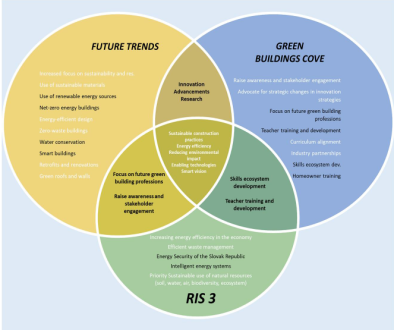
Recognising these challenges, the SECOVE project has played a catalytic role in supporting Vocational Education and Training (VET) providers across Europe in aligning their educational provision with Regional Smart Specialisation Strategies (RIS3), labour market needs and the objectives of the European Green Deal. Deliverable D3.2, Recommendations for Alignment of VET Courses to Smart Specialisation Strategies, highlighted the necessity of continuously updating curricula by integrating digital technologies, green competences, innovative pedagogical approaches and closer cooperation with industry.
Inspired by these recommendations, SAEK Εgaleo initiated a comprehensive curriculum modernisation process across its energy-related specialisations, particularly the Renewable Energy Systems Technician, Automation Technician, and the innovative Maritime Automation Technician programme. Rather than introducing isolated modifications, the institution adopted a holistic approach that combined curriculum redesign, digital transformation, innovative teaching methodologies and authentic workplace simulation, ensuring that graduates acquire the competences required by the evolving sustainable energy ecosystem.
Responding to SECOVE’s Vision for Modern Vocational Education
One of the central findings of Deliverable D3.2 was that vocational education must evolve beyond traditional classroom instruction towards competence-based learning environments that mirror real industrial conditions. The report emphasised the integration of virtual reality, digital simulations, problem-based learning, interdisciplinary teaching and continuous curriculum updates in response to technological innovation.
SAEK Εgaleo embraced these recommendations by reviewing both the content and the pedagogical philosophy of its programmes. Instead of limiting curriculum updates to the addition of isolated topics, the institution redesigned several learning activities to promote active learning, critical thinking, practical decision-making and digital competence development.
This transformation reflects the broader objectives of SECOVE by creating educational pathways that prepare learners not only to operate existing technologies but also to adapt to future technological developments within the sustainable energy sector.
Modernising the renewable energy systems curriculum
The most significant curriculum developments were implemented within the Renewable Energy Systems Technician specialisation, where technological innovation was combined with substantial updates of learning outcomes and teaching practices.
A major innovation was the integration of Matterport technology into the educational process. Through immersive virtual environments, students can now explore real renewable energy installations, electrical infrastructures and technical facilities with an unprecedented level of realism. Instead of relying exclusively on laboratory demonstrations or static photographs, learners navigate complete industrial environments, inspect equipment from multiple perspectives and familiarise themselves with authentic workplace conditions before entering professional practice.
The use of Matterport has significantly enhanced experiential learning. Students participate in realistic fault diagnosis scenarios, analyse equipment failures, identify maintenance requirements and develop systematic troubleshooting strategies in environments that accurately replicate operational renewable energy facilities.
This virtual experience complements traditional laboratory sessions while substantially increasing the frequency and diversity of practical exercises available throughout the programme.Equally important, the updated curriculum places greater emphasis on preventive maintenance, operational safety, energy efficiency assessment and technical decision-making, allowing learners to connect theoretical knowledge with practical industrial applications.
Integrating sustainability through new learning units
Beyond technological innovation, SAEK Εgaleo introduced important curriculum revisions by expanding the sustainability dimension of vocational education.
One of the most substantial developments concerns the introduction and enhancement of learning units dedicated to Circular Economy. Rather than presenting sustainability solely as an environmental concept, the revised curriculum examines resource efficiency, waste reduction, lifecycle thinking, material recovery and sustainable industrial processes within renewable energy systems. Students are encouraged to understand how circular economy principles influence engineering decisions, maintenance practices and long-term infrastructure planning.
Similarly, the Energy Economics learning unit underwent a comprehensive redesign. The revised module now explores the economic dimensions of energy production, investment analysis, energy markets, cost-benefit evaluation, energy communities, policy frameworks and the financial aspects of renewable energy deployment.
This transformation enables students to appreciate that technical decisions are increasingly interconnected with economic sustainability and regulatory developments.These curriculum updates contribute to a more interdisciplinary educational experience, preparing graduates to understand both the technological and socio-economic dimensions of the green transition.
Strengthening digital competences within automation education
Curriculum modernisation was equally important within the Automation Technician specialisation.
Following SECOVE recommendations concerning digitalisation and smart technologies, several learning activities were redesigned to strengthen students’ understanding of industrial automation within modern energy systems.
Greater emphasis is now placed on programmable logic controllers (PLCs), industrial communication, smart sensors, supervisory control systems, Internet of Things (IoT) applications and intelligent monitoring solutions that increasingly characterise Industry 4.0 environments.
Students are encouraged to analyse integrated automation systems rather than isolated components, understanding how automation supports energy optimisation, predictive maintenance, building management and sustainable industrial production.The thematic Maritime Automation
Technician programme also benefited from this modernisation process by incorporating contemporary concepts related to intelligent vessel automation, energy-efficient maritime technologies and digital monitoring systems, reflecting the increasing digital transformation of the maritime sector.
Innovative teaching methodologies for authentic learning
Curriculum innovation was accompanied by an equally important transformation of teaching methodologies.
Traditional lecture-based instruction has gradually been complemented by Problem-Based Learning, Scenario-Based Learning and project-oriented educational activities that encourage learners to solve realistic engineering challenges.
Students are no longer asked simply to memorise technical procedures. Instead, they investigate complex industrial scenarios, diagnose operational problems, evaluate alternative technical solutions and justify engineering decisions using evidence-based reasoning.
Virtual industrial environments developed through Matterport further reinforce these methodologies by allowing learners to repeatedly practise inspection procedures, equipment familiarisation and fault identification without the logistical limitations associated with physical site visits.
These innovative approaches promote active participation, collaborative learning, critical thinking and professional confidence while reducing the gap between vocational education and actual workplace practice.
Smart specialisation strategies through curriculum alignment
The curriculum developments implemented at SAEK Εgaleo closely reflect the priorities identified within Greece’s Smart Specialisation
Strategy and the recommendations formulated through SECOVE Deliverable D3.2.The revised programmes promote green skills alongside digital competences, integrating sustainability, renewable energy technologies, automation, energy efficiency and digital transformation within coherent learning pathways.
They also strengthen the relationship between vocational education and regional economic priorities by preparing technicians capable of supporting the ongoing green and digital transitions across multiple industrial sectors.
By embedding immersive technologies, interdisciplinary knowledge and authentic workplace experiences into everyday teaching practice, SAEK Εgaleo demonstrates how vocational education can respond proactively to emerging labour market needs while maintaining strong alignment with European policy priorities.
Conclusion
The curriculum modernisation undertaken at SAEK Εgaleo represents considerably more than a routine programme update. It reflects a strategic institutional commitment to transforming vocational education in response to Europe’s rapidly evolving sustainable energy landscape.
Inspired by the recommendations of SECOVE Deliverable D3.2, the institution successfully integrated innovative digital technologies, immersive learning environments, updated sustainability content and modern pedagogical approaches across its Renewable Energy Systems and Automation programmes. The incorporation of Matterport technology, the comprehensive revision of the Energy Economics learning unit, the introduction of Circular Economy principles and the strengthening of smart automation competences collectively illustrate a holistic approach to curriculum innovation.
These developments not only enhance the quality and relevance of vocational education but also contribute directly to the objectives of the SECOVE project by strengthening the alignment between VET curricula, Smart Specialisation Strategies and regional labour market needs.
Through this continuous process of curriculum renewal, SAEK Εgaleo is equipping future technicians with the knowledge, digital competences and professional adaptability required to actively contribute to Europe’s green and digital transition while supporting the long-term sustainability of the energy sector.