Transforming Sustainable Construction Education at TUKE: SECOVE as a Driver of Curriculum Innovation
From SECOVE Recommendations to Curriculum Development
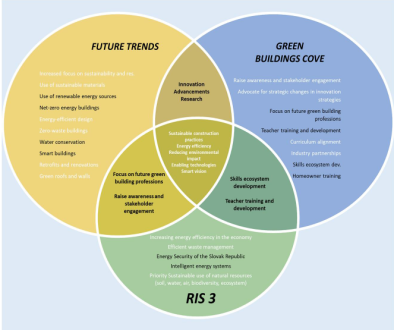
The SECOVE project has significantly contributed to the modernisation of sustainable construction education at the Faculty of Civil Engineering, Technical University of Košice (TUKE). Guided by the recommendations of Deliverable D3.2 for Slovakia, the faculty updated its educational content to better reflect labour market needs and the priorities of the Slovak Smart Specialisation Strategy (RIS3), particularly in sustainable energy systems, climate resilience and digitalisation.
Rather than introducing a standalone programme, TUKE integrated SECOVE principles into existing courses and practical training activities, creating a more interdisciplinary and practice-oriented curriculum.
Integrating Green and Digital Competences
The updated curriculum introduced or strengthened topics including:
- Blue-green infrastructure and sustainable water management;
- Nature-based solutions and green roofs;
- Energy-efficient and low-carbon buildings;
- Renewable energy integration;
- Building Information Modelling (BIM);
- Environmental monitoring and performance assessment;
- Climate adaptation and resilience of the built environment.
These updates directly respond to the competence gaps identified in D3.2, particularly the need for stronger green, digital and interdisciplinary skills in the construction sector.
Learning Beyond the Classroom
A key innovation introduced through SECOVE was the integration of the Greenizola Living Lab into teaching activities. Students now complement theoretical learning with practical experience through monitoring green roofs, analysing rainwater management systems, evaluating energy performance and working with real environmental data.
Project-based learning has also been strengthened through the SECOVE Innovation Hub, where students collaborate with researchers, vocational schools and industry partners on real sustainability challenges. National student competitions, workshops and mentoring activities further support innovation, teamwork and problem-solving skills.
Strengthening Industry Collaboration
SECOVE has reinforced cooperation between TUKE and regional stakeholders, including SMEs, professional organisations and public institutions. Industry experts contribute to student mentoring, project evaluation and curriculum development, ensuring that educational outcomes remain closely aligned with current and future labour market needs.
This collaborative approach supports one of the key recommendations of Deliverable D3.2—to strengthen cooperation between education, research and industry in developing future green skills.
Educational Impact
The curriculum updates introduced during SECOVE have enhanced the relevance of engineering education by integrating sustainability, digital technologies and practical learning into existing study programmes. Students are now better prepared to address contemporary challenges related to energy-efficient buildings, climate adaptation and sustainable urban development.
By embedding SECOVE recommendations into both curriculum content and teaching methodology, TUKE has strengthened its role as a regional Centre of Vocational Excellence and contributed to preparing the next generation of professionals for the green transition.