Shaping the Green Workforce: How SECOVE’s Strategic Vision In5pired UNIWA’s Circular Economy Programme
From strategic research to educational reality
The transition away from a “take-make-waste” industrial model toward a regenerative circular economy is essential for Europe’s sustainable future. However, to successfully make this leap, the labour market urgently requires professionals equipped with a completely new, specialised skill set. The Vocational Education and Training (VET) course, “CircularEconomy: Transition and Strategies”, provided by the University of West Attica’s (UNIWA) Centre of Continuing Education and Lifelong Learning (KEDIVIM), was designed precisely to meet this challenge.
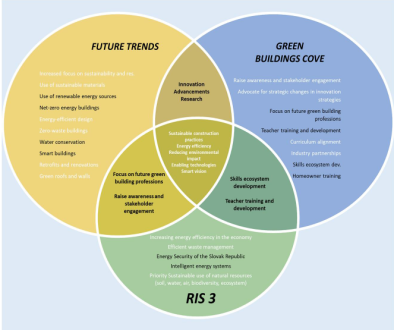
Far from being a conventional academic offering, this initiative serves as a direct response to the SECOVE project’sDeliverable “Recommendations for alignment of VET courses to Smart Specialisation Strategies (RIS3)”. By examining the framework of UNIWA’s programme alongside the consortium’s recommendations for the Attica Region, it becomes evident how the university transformed strategic research into a powerful, market-ready educational tool.
Tackling the educational shortfall
In its “Fitness Analysis”, the D3.2 document uncovered a pressing issue within Greece’s educational infrastructure: existing secondary vocational schools (EPAL) currently lack the specialised frameworks required to support the nation’s smart specialisation goals. The SECOVE report pinpointed a structural void, explicitly noting that traditional vocational paths donot provide the necessary education to facilitate the green transition.
To bypass this bottleneck, the report designated Higher Educational Institutions (HEIs) as crucial actors for regional innovation,specifically identifying UNIWA as an academic pioneer whose curricula already focus on “the circular economy and energysaving”. Embracing this responsibility, UNIWA created this targeted continuing education program. Its goal is to rapidly generate the “Circular Economy Monitoring Technicians” and sustainability experts that SECOVE’s “Future Trends” analysis identified as highly sought after by today’s employers.
National priorities and emerging trends
SECOVE recommendations emphasised that any new YET initiatives must deeply resonate with Greece’s National Smart Specialisation Strategy (RIS3) 2021-2027, which places heavy emphasis on the “Environment and Circular Economy” pillar.Furthermore, the report underlined the absolute necessity of embedding “Green Skills” into modern curricula and leveraging thesynergies between circular practices and digital integration (such as IoT).
The UNIWA program was meticulously crafted to answer this call. Its syllabus delves deeply into the regulatorylandscape, circular supply chain logistics, and the creation of sustainable business models, delivering the exactcompetencies SECOVE identified as lacking in the general workforce. Consequently, it directly aligns regional talent withnational and European environmental objectives.
Embracing accessible learning formats
A key takeaway from the D3.2 report is that modern professional training must be adaptable and “brief in duration“, guaranteeing that the skills taught are immediately applicable in a fast-paced job market. SECOVE highlighted thatoperational flexibility is paramount for adult learners.
UNIWA integrated this philosophy seamle5sly into its Circular Economy course. Eschewing the lengthy traditional degreeformat, the university designed an intensive 50-hour VET experience completed in just 8 weeks (awarding 5 ECTS credits).To meet SECOVE’s demand for accessibility—especially for actively employed adults—UNIWA opted for a 100% remote, asynchronous and synchronous distance-learning structure. This strategic choice reflects D3.2’s guidance perfectly, offering asmooth, barrier-free route for entrepreneurs, scientists, and corporate staff to upgrade their skills alongside their regularcareers.
Fostering Innovation and Practical Enterprise Application
Under the “Best CoVE Practices“ section, the SECOVE study advocates for nurturing a ”Culture of Innovation and Research“ through pragmatic, industry-relevant teaching methods. UNIWA took this recommendation to heart. The course transcends mere theory; it is explicitly engineered to “promote the cultivation of a sustainability mentality and anecologically responsible attitude“.
Students are equipped with actionable, real-world tools. For instance, the curriculum tasks learners with evaluating the “linearity and circularity of various products and services“ and identifying viable opportunities to implement circular models within existing enterprises. Through modules like “Circularity in Practice“, UNIWA bridges the divide between academic concepts and the hands-on execution required by modern green businesses.
Accelerating Labour Market Integration
The SECOVE research strongly advises the “Direct Integration of the Labour Market with Educational Institutions“ to solvereal-world industry problems. As new European Green Deal directives and Greece’s National Action Plan for the CircularEconomy introduce strict regulations and fresh financial incentives, companies face a severe talent drought. They desperatelyneed experts who can navigate these new waters.
UNIWA’s VET program serves as a direct remedy for this shortage. Aligning with SECOVE’s objective of “CatalysingBusiness Performance“, the training empowers professionals to champion sustainability from within their own companies. By teaching participants how to extract economic value from circular solutions and optimise supply chains, the program significantly boosts graduates’ marketability while aiding corporate adaptation.
Conclusion
UNIWA’s “Circular Economy: Transition and Strategies“ stands as a living embodiment of the SECOVE project’s vision.Every element of the course—from its focus on sustainable business models and 100% remote delivery to its pragmaticapproach and strict alignment with RIS3 guidelines—demonstrates that SECOVE findings and recommendations servedas its foundational roadmap. By turning SECOVE’s analytical insights into an accessible, high-calibre educationalpathway, UNIWA is taking proactive steps to drive Greece’s transition toward a resilient circular economy and a highly skilled green workforce.