Driving Inclusive Excellence in Sustainable Energy VET
Our Observatories’ Impact:
The SECOVE project continues to demonstrate how Centres of Vocational Excellence can play a strategic role in supporting Europe’s green and digital transitions while promoting inclusion and equal opportunities in vocational education and training. One of the most significant achievements of the project has been the development of the SECOVE Observatories on Inclusiveness and Attractiveness of VET Practices, implemented across Greece, Spain, Italy, Portugal, and Slovakia.
The Observatories were designed as a collaborative European platform to collect, analyse, and share inclusive practices related to sustainable energy education and STEM pathways. Their objective is not only to strengthen the quality of VET systems, but also to encourage greater participation of women and underrepresented groups in technical professions connected to the energy transition.
The impact evaluation confirms that the Observatories have evolved from simple repositories into strategic tools for institutional innovation and evidence-based policy development. To date, the SECOVE network has documented 141 inclusive practices involving innovative teaching methodologies, gender-sensitive pedagogical approaches, and regional policy initiatives supporting inclusive vocational excellence. At the same time, 145 institutions have actively contributed to the network, including VET providers, universities, public authorities, and industry stakeholders.
One of the most relevant outcomes concerns female participation in technical and energy-related pathways. SECOVE activities contributed in female enrolment within pilot technical programmes, exceeding the project’s initial targets. This positive trend was particularly supported by orientation initiatives, awareness campaigns, and the Summer VET Academies, which encouraged girls to explore careers in sustainable energy and STEM sectors.
The project also highlighted the importance of innovative and experiential learning methodologies. Activities involving Virtual Reality (VR), Challenge-Based Learning, applied research projects, and collaboration with companies proved especially effective in increasing student engagement and reducing stereotypes associated with technical professions. Multimedia communication campaigns and female role models also played an important role in improving the attractiveness of STEM careers among younger generations.
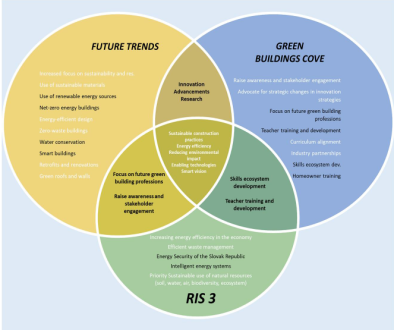
Beyond learner impact, the SECOVE Observatories contributed to stronger cooperation between education providers, regional authorities, and industry actors. In Greece, for example, Observatory findings were integrated into the regional Smart Specialisation Strategy (RIS3) for Attica, demonstrating how VET can directly support regional economic development and sustainability objectives. Similar collaborative approaches were implemented across all partner countries, reinforcing the role of VET as a driver of innovation, inclusion, and resilience.

As SECOVE moves toward the final phase of implementation, the Observatories represent a lasting legacy for European VET systems. By combining inclusion, innovation, and sustainable energy skills, SECOVE is helping shape a more responsive and future-oriented model of vocational excellence aligned with the goals of the European Green Deal.